From gracing garden plots and woodland trails to being worn as pins on St David’s Day and as hats by rugby fans, daffodils are an iconic symbol of Wales. Find out why these bright yellow blooms are so celebrated, along with the best places to see them when out and about.
What is the Welsh National Flower?
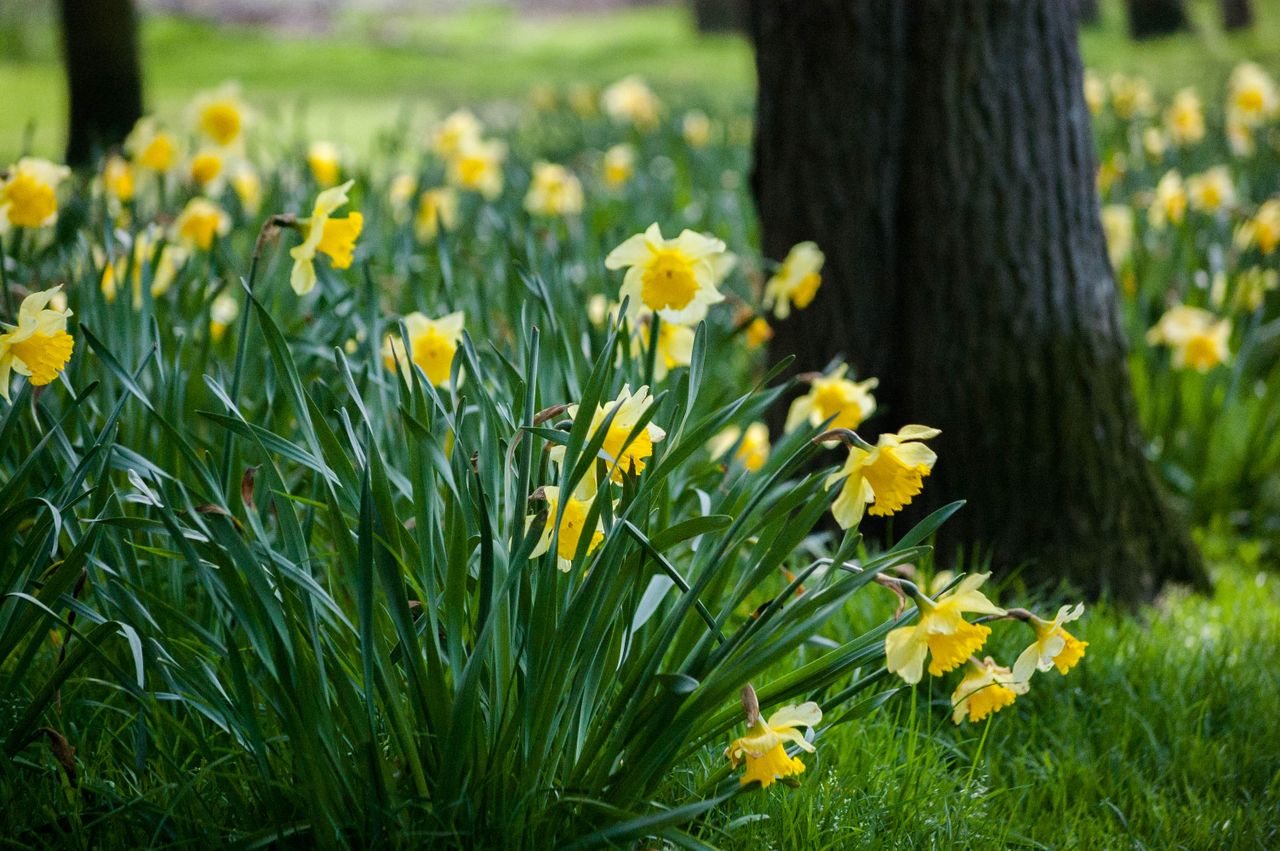
The daffodil, with its distinctive sunny yellow flowers, is, of course, Wales’ national flower. While they’re now pretty synonymous with the country, these bright yellow flowers only started being heavily associated with Wales in the 19th century.
Nowadays, daffodils are common flowers seen across the country, particularly on St David’s Day – a celebration of Wales, Welsh culture and the country’s patron saint – at the beginning of spring.
Why is the Daffodil a Welsh Symbol?
Leeks have a longer history as a Welsh symbol, with roots as far back as the 7th century. The story goes that Welsh soldiers were advised by Cadwaladr (or, some sources attribute this to St. David) to wear leeks on their hats to show which side they were on when battling against the Saxons.
But where do daffodils come in? The Welsh name for daffodils is cenhinen Bedr, which means ‘Peter’s leek’, connecting them directly to this already highly significant symbol. Daffodils also start blooming to coincide with St David’s Day on the 1st of March, making them popular choices to wear on clothing during this time – they’re a bit prettier than leeks after all!
By the late Victorian period, the flower had grown in popularity as a national symbol. It was further consolidated in 1911, when the former Prime Minister David Lloyd George proudly wore a daffodil during the investiture of the Prince of Wales.
See our guide to find out more about Welsh national symbols.
Are Daffodils Native to Wales?
There are 36 species of daffodil, with over 26,000 cultivated varieties. Some are native to the UK, with two being particularly unique to Wales.
The Wild Daffodil or Lent Lily
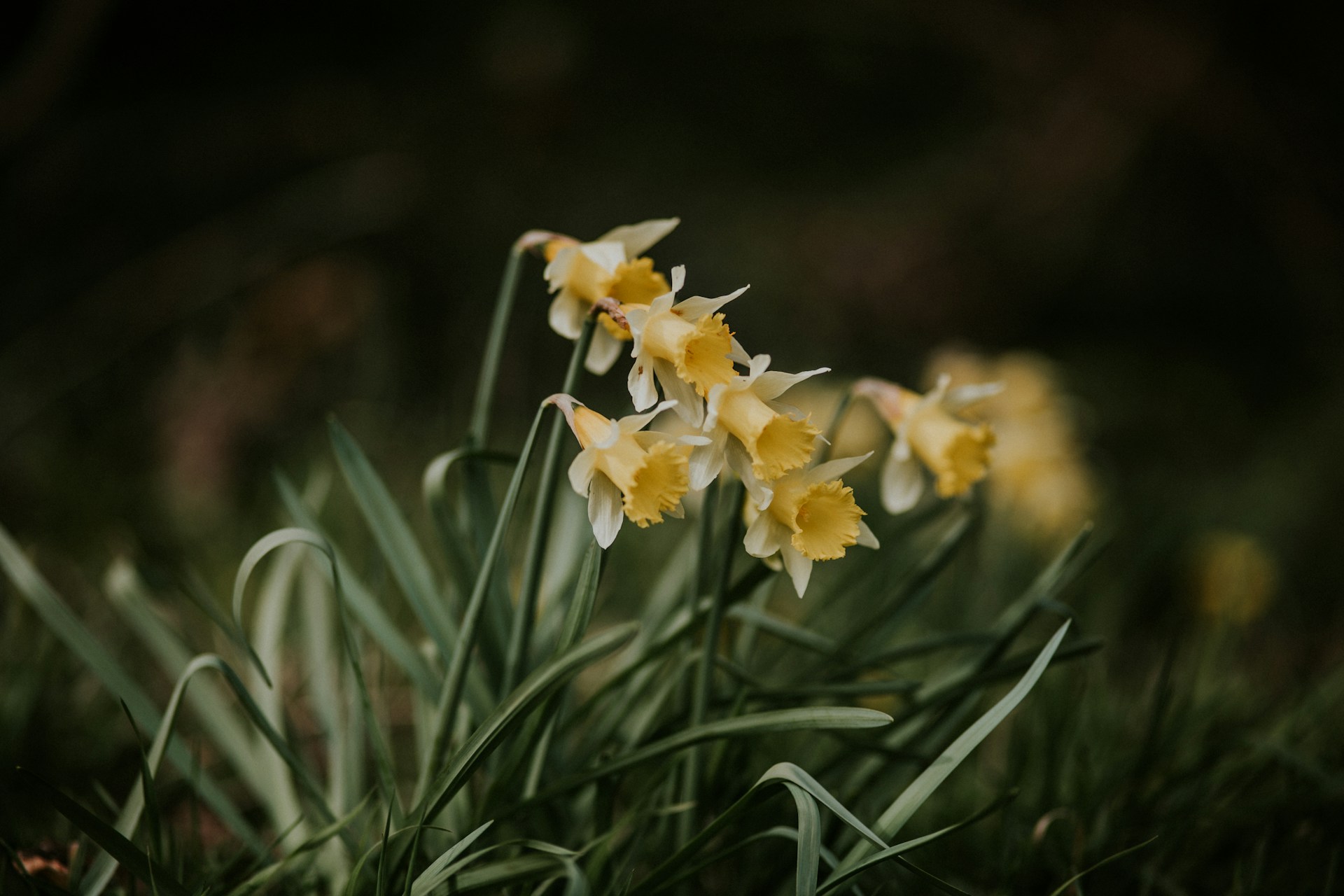
Wild daffodils (Narcissus pseudonarcissus), also known as the Welsh Daffodil, the Lent Lily and the Bell Rose, are the classic example of Welsh daffodils. The very bright yellow daffodils that you might see along roadsides or in parks are likely garden varieties – you’re more likely to see true wild daffodils in woodlands or undisturbed meadows.
Wild Welsh daffodils have the distinctive daffodil flower shape, but tend to have pale yellow petals with a darker trumpet. These two tones are one of the key indicators you’ve found true wild daffodils rather than an escaped garden variety. They usually grow up to 35cm tall.
You can see these flowers in parts of South Devon, the Lake District and, of course, Wales.
The Tenby Daffodil
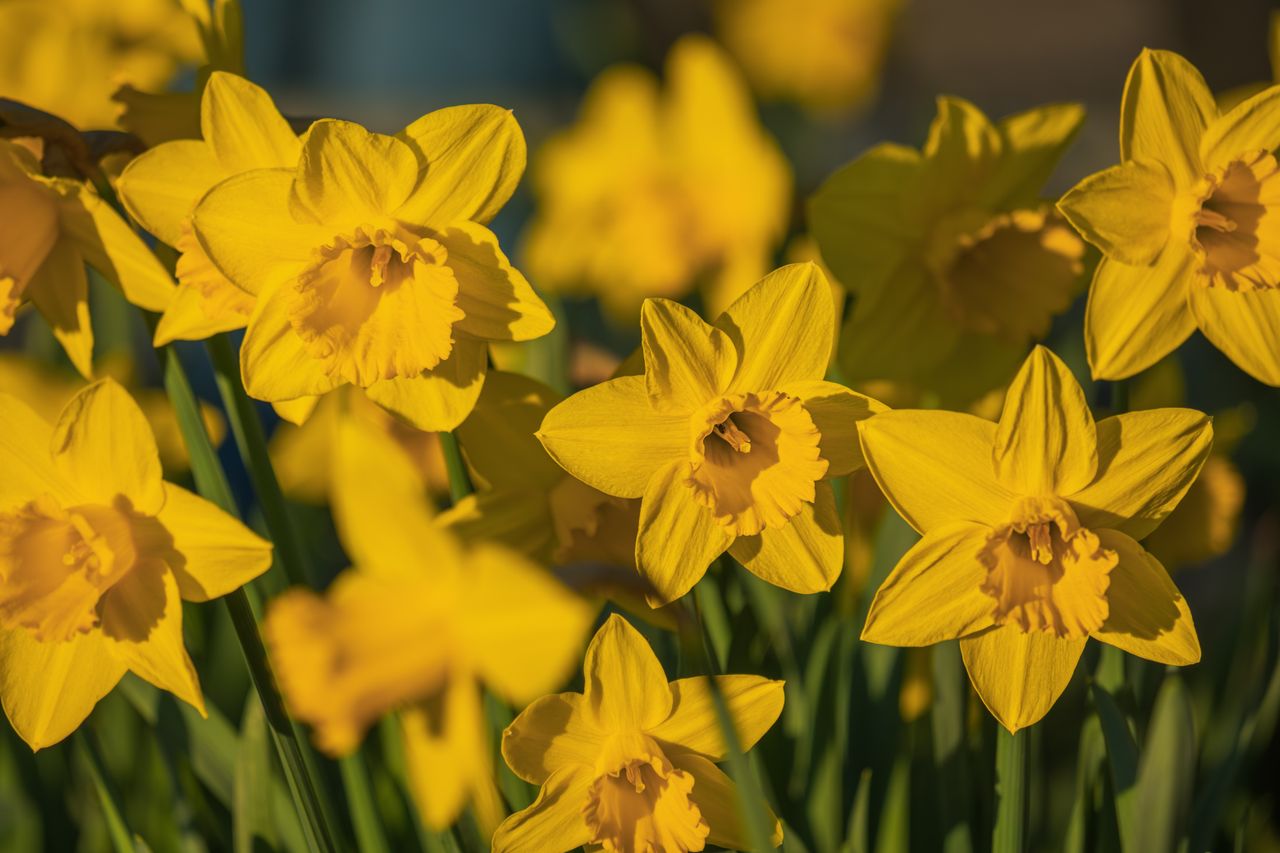
The Tenby Daffodil (Narcissus obvallaris) is often considered the true Welsh daffodil, as it is native to Pembrokeshire in West Wales. It is quite a rare variety and can mostly only be seen in the coastal areas around Tenby, although you might spot some in other parts of Pembrokeshire, Carmarthenshire and Ceredigion.
Unlike the two-toned Lent Lily, the Tenby daffodil’s petals and trumpet both have a solid golden yellow colour. They also tend to have slightly shorter stems and trumpets than wild daffodils and commercial hybrids.
The Tenby variety was discovered in 1809 by the botanist William Baxter, when he saw it growing near the beach. Since its discovery, it has become a symbol of the town’s rich history and charm, as well as a broader Welsh icon.
The Rarity of Welsh Daffodils
Both wild daffodils and Tenby daffodils are now quite rare in the wild due to habitat loss. The Tenby daffodil almost became extinct during the Victorian period due to over-picking to satisfy a growing garden craze.
For more iconic Welsh flowers, see our guide to the Welsh poppy.
Where to See Daffodils in Wales
Wales comes alive with daffodils in spring, with the charming yellow blooms popping up from February to early May. There are plenty of gardens and woodlands you can visit across Wales to experience some of the daffodil magic for yourself. Some of our favourite daffodil spots in West Wales include:
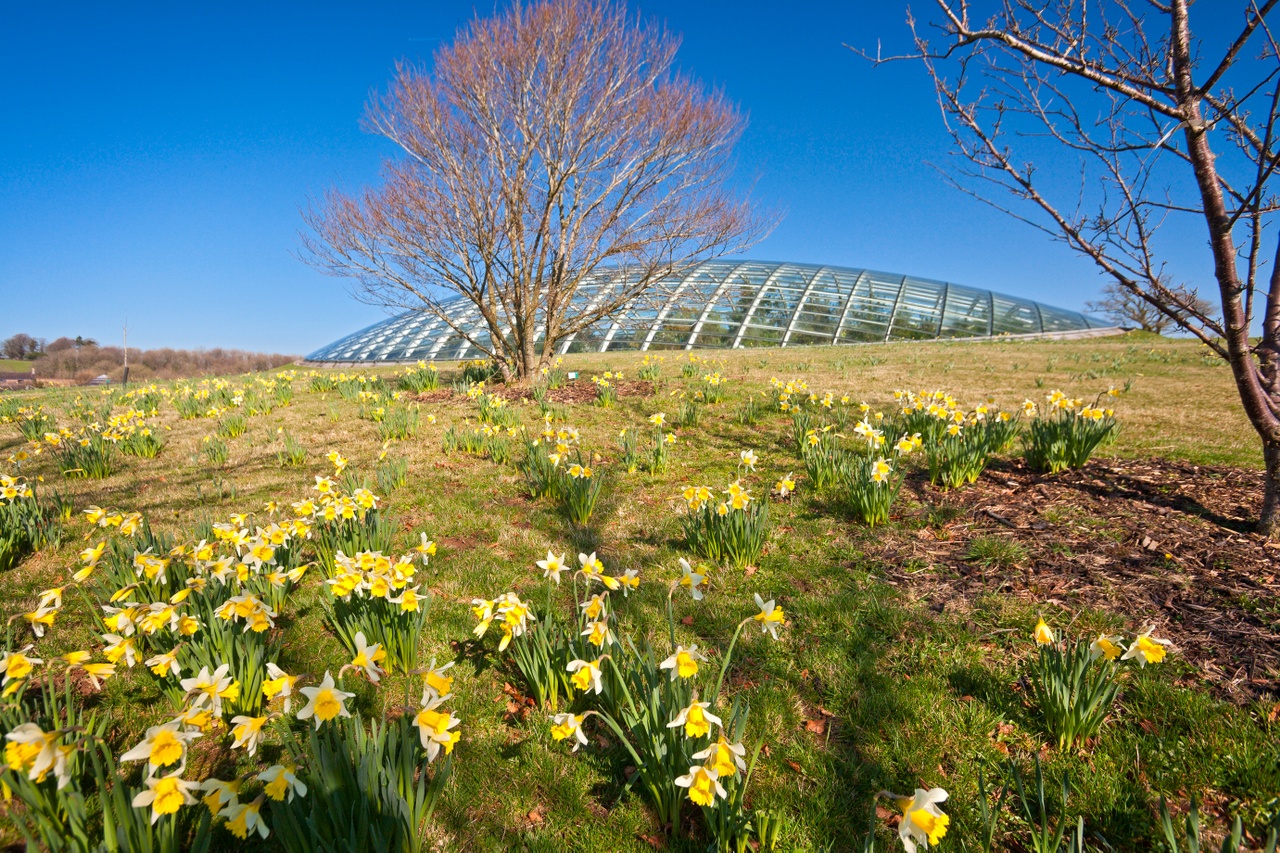
- The National Botanic Garden of Wales, Carmarthenshire: When in season, you can see up to 30,000 daffodils and 50 varieties across the garden and grounds, with a daffodil trail taking you past all the best spots.
- Colby Woodland Garden, Pembrokeshire: In spring, large daffodil drifts decorate the meadow and banks here, creating a stunning display alongside swathes of bluebells, crocuses, camellias and more.
- Llanerchaeron, Ceredigion: Daffodils can be seen across the estate, blooming by the woodland, river, croquet lawn, walled garden, and orchard.
- Minwear Woods, Pembrokeshire: An ancient woodland set in the Pembrokeshire Coast National Park with bountiful beauty to see in spring, including daffodil blooms and other seasonal flowers.
- Parrog & Newport, Pembrokeshire: A great place to see daffodils by the coast, with the various paths lined with the iconic spring flowers.
- Tenby, Pembrokeshire: When strolling around Tenby, keep your eyes peeled for the famous Tenby daffodils – they tend to bloom earlier in the season.
Book Your Perfect West Wales Stay
There’s a particular magic to West Wales when the daffodils are in bloom, yet with its gorgeous coastline and rich heritage, it’s an enchanting place to visit no matter the time of year.
Whether you want to catch the spring displays, enjoy the stark natural beauty in winter or embark on a traditional summer beach break, our self-catering holiday lets serve as the perfect backdrop.
Discover our Tenby holiday cottages to start planning your West Wales trip!
Featured Properties
Discover some of our beautiful properties in Pembrokeshire, Ceredigion and Carmarthenshire.
